Planning a Safari in Kenya? Don't Hire a 4x4 Until You've Read This
If you’re planning your dream safari in Kenya, one of the biggest decisions you’ll make is choosing the right safari vehicle.
Search online and you’ll quickly find hundreds of companies offering “4×4 safari vehicle hire.” Prices vary dramatically, the photos all look similar, and almost every website promises the “best service.”
So why do some travelers arrive in Nairobi only to discover their vehicle isn’t what they booked? Why do some pay unexpected charges before departure? And what happens if your vehicle breaks down in the middle of the Masai Mara?
These are questions that many websites avoid.
I’ve spent the last 15 years working in Kenya’s safari industry as both a professional driver-guide and a reservations manager. I’ve led more than 100 safaris and worked with every style of travel—from budget overland adventures to tailor-made luxury safaris.
I’ve seen almost everything that can happen before, during, and after a safari.
This guide isn’t written to scare you. It’s written to help you make informed decisions so your safari starts for the right reasons.
Why Choosing the Right Safari Vehicle Matters
A safari vehicle is more than transportation.
It becomes your office, restaurant, photography platform, wildlife observation deck, and sometimes your shelter for long hours exploring Kenya’s national parks.
The difference between an average safari and an unforgettable one often comes down to the vehicle and the people operating it.
A well-maintained vehicle with an experienced driver-guide allows you to focus on wildlife instead of worrying about logistics
The Biggest Mistakes Travelers Make When Hiring a Safari Vehicle
Choosing the Cheapest Quote
This is probably the most common mistake.
Many first-time visitors receive several quotations and naturally choose the cheapest option.
Unfortunately, the lowest price sometimes comes from companies that haven’t clearly explained what is included.
You may later discover extra charges for fuel, driver allowances, insurance, or other services you assumed were part of the package.
Price should never be the only factor.
Always compare what is included, not just the final figure.
Booking Through Too Many Middlemen
This happens more often than people realize.
Some companies advertising safari vehicles online don’t actually own or manage the vehicles.
Instead, they subcontract your booking to another operator, who may subcontract it again.
Each additional layer increases the chances of communication errors.
In some cases, travelers expecting a Land Cruiser arrive to find a safari van waiting instead.
Whenever possible, ask who will actually be operating your safari.
Not Understanding the Difference Between a Brand and a Vehicle Model
One misconception I hear regularly is:
“I want a Toyota instead of a Land Cruiser.”
Toyota is the manufacturer.
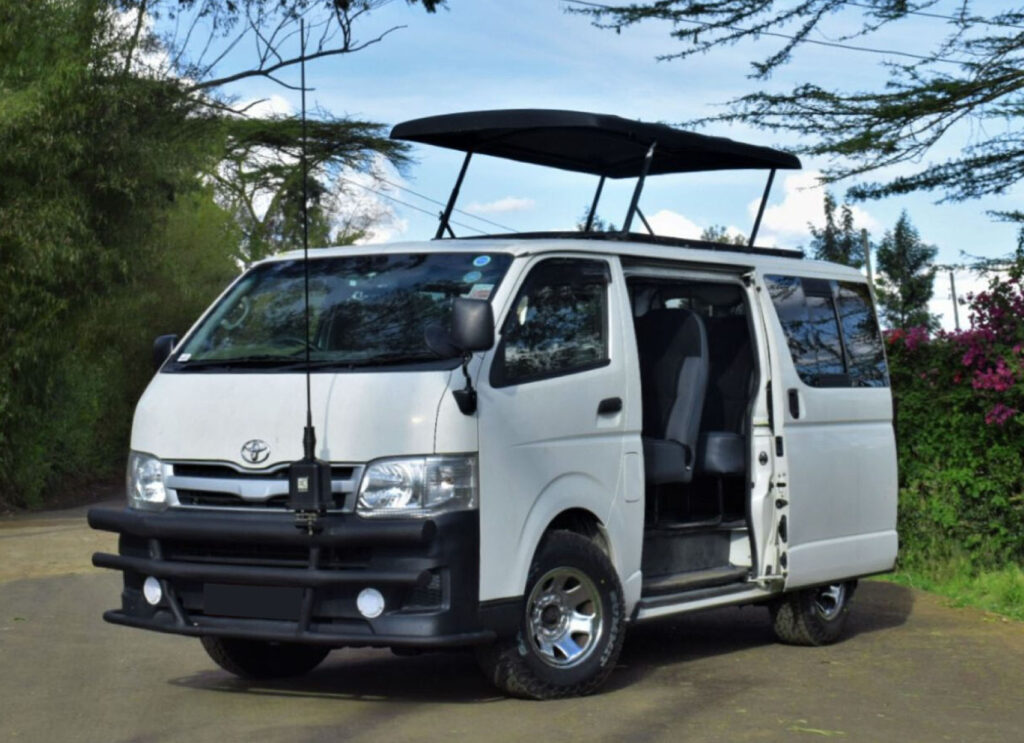
A Land Cruiser and a Safari Van are different vehicle models built by Toyota.
The important question isn’t the brand.
The important question is whether the vehicle matches your safari.
Land Cruiser vs Safari Van: Which Should You Choose?
Many people assume the Land Cruiser is always the better choice.
The truth is more nuanced.
A safari van is ideal for many routes and offers excellent value for money.
A Land Cruiser becomes particularly valuable where roads are rough, especially during the rainy season or when visiting more remote areas.
The best choice depends on:
- Your itinerary
- The season
- Group size
- Budget
- Photography needs
- Comfort expectations
Choosing the right vehicle is about suitability—not prestige
What Happens If Your Safari Vehicle Breaks Down?
Here’s something many companies don’t discuss.
Even brand-new vehicles can develop mechanical problems.
Safari roads are challenging.
Dust, mud, rocky tracks, and long driving distances place enormous strain on any vehicle.
The real question isn’t:
“Can a vehicle break down?”
The better question is:
“What happens if it does?”
Professional operators should already have a recovery plan.
In our operations, every departure begins with a full vehicle inspection. If a mechanical issue occurs during safari, we coordinate a standby chase vehicle or replacement depending on the location. Where appropriate, guests can continue their scheduled game drives through their lodge or camp while replacement arrangements are made.
Good contingency planning ensures that a mechanical issue doesn’t have to ruin an entire safari.
Airport Pickups: A Small Detail That Can Make a Big Difference
One of the first moments of your safari is often the most stressful.
After a long international flight, travelers expect to see someone waiting at arrivals.
Occasionally, genuine misunderstandings happen. Flight numbers change, arrival times are updated, or incorrect details are shared during the booking process.
Experienced ground operators prepare for these situations.
Having airport representatives and backup transport available can prevent unnecessary delays and help guests begin their safari smoothly.
Questions Every Traveler Should Ask Before Paying a Deposit
Before confirming any booking, ask:
- Is this a private safari or a shared departure?
- Which vehicle model will I receive?
- Is fuel included?
- Are park entry fees included?
- Does the vehicle have a pop-up roof?
- Are charging ports available?
- Is there a refrigerator or cooler box?
- How old is the vehicle?
- What happens if the vehicle develops a mechanical problem?
- Is the driver licensed and experienced?
- What insurance covers both the vehicle and passengers?
A reputable operator should answer these questions clearly and confidently.
What I Have Learned After 15 Years in Kenya's Safari Industry
People often ask me what the most important lesson has been.
It isn’t about wildlife.
It isn’t about driving.
It isn’t even about vehicles.
It’s about people.
Every safari brings together guests from different countries, cultures, expectations, and travel styles.
Guiding is an art of patience.
A great safari guide doesn’t simply drive from one park to another. They listen, adapt, solve problems calmly, and understand that no two travelers experience Kenya in exactly the same way.
That lesson has shaped how I approach every safari—whether it’s an overland adventure, a family holiday, a photographer’s expedition, or a luxury itinerary.
Why Travelers Choose Vanvic Safari Transport
At Vanvic Safari Transport, we apply the same principles that have guided my career:
- Thorough vehicle inspections before departure.
- Modern, well-maintained safari vehicles.
- Experienced driver-guides, many with more than 10 years in the field.
- Premium vehicle and passenger insurance.
- 24/7 operational support.
- Standby recovery arrangements when needed.
- Experience managing everything from overland tours to tailor-made luxury safaris.
Our goal isn’t simply to rent you a vehicle.
It’s to ensure your safari runs smoothly from the moment you arrive in Nairobi until your journey comes to an end
Final Thoughts
Hiring a safari vehicle is one of the most important decisions you’ll make when planning a safari in Kenya.
The cheapest quote isn’t always the best value.
The most attractive website isn’t always the most experienced operator.
Instead, choose a company that communicates clearly, answers your questions honestly, maintains its vehicles, and has real experience handling the unexpected.
A safari is often a once-in-a-lifetime experience.
The right vehicle—and the right team behind it—can make all the difference.